
Products
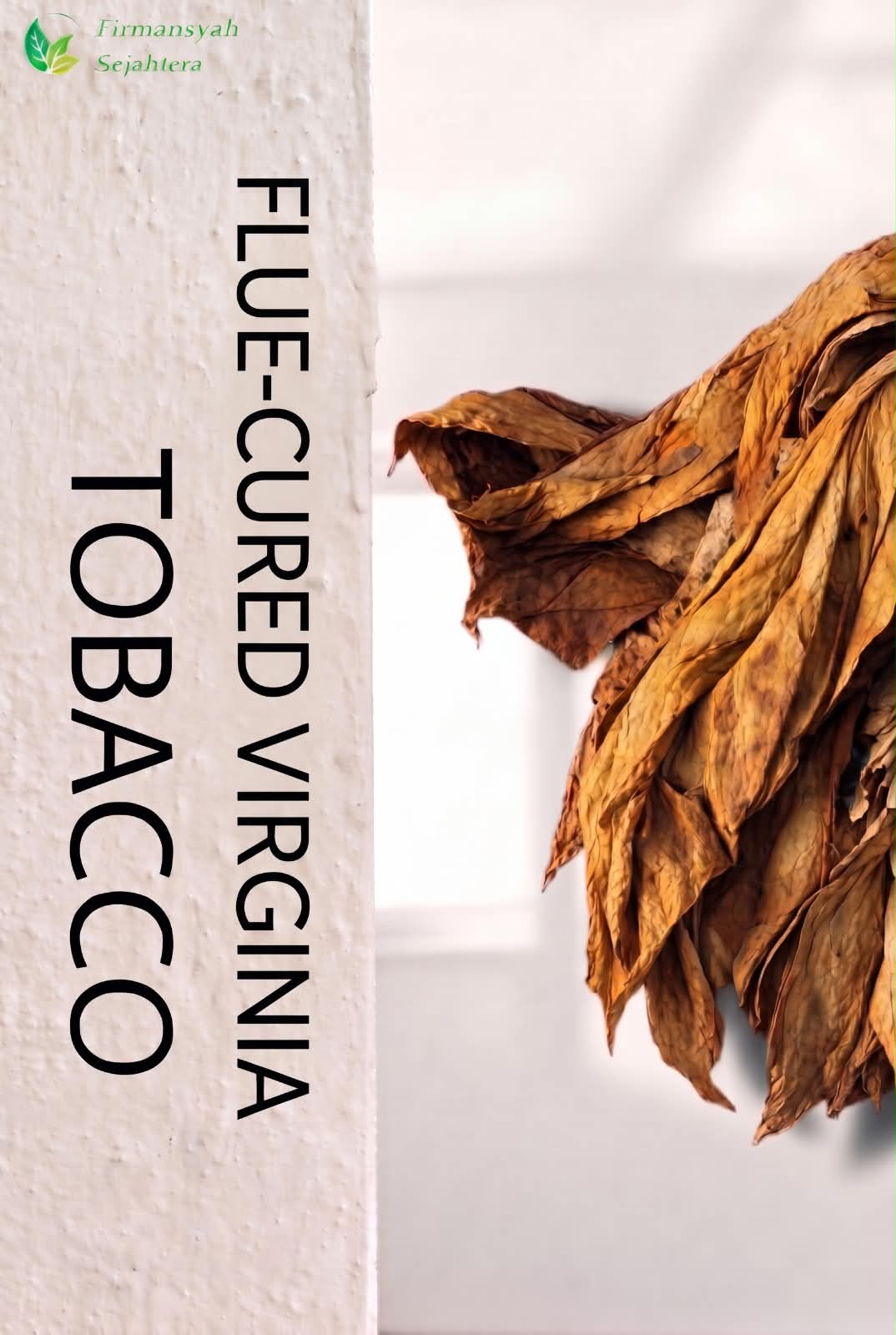
Flue-Cured Virginia (FCV) Tobacco
Flue-Cured Virginia (FCV) tobacco—also known as "bright tobacco"—is the most popular type of tobacco globally. It originated in the U.S. state of Virginia and was first developed in the 1830s using a curing method that employs heated flues. The plant thrives in tropical to subtropical regions with moderate rainfall and sandy, nutrient-poor soil—conditions found in places such as the United States, Southern Brazil, and Zimbabwe, as well as in Indonesian regions like Lombok, Bojonegoro, and Lampung. FCV accounts for approximately 40–50% of total global tobacco production and serves as a primary ingredient in both "American Blend" and "Virginia Blend" cigarettes. The defining characteristic of FCV lies in its "flue-curing" process: the leaves are cured in enclosed ovens for 4 to 7 days under precisely controlled temperatures. This process halts chlorophyll formation and converts starches into natural sugars—all without direct exposure to smoke—resulting in a distinctive golden-yellow color, a high sugar content (15–25%), and a sweet, mild aroma. Before reaching the market, FCV typically undergoes a "tipped and threshed" process, in which the leaf lamina is separated from the midrib (stem). This step facilitates flavor blending, improves storage efficiency, and ensures consistent product quality.
Publish : 2023-11-30 00:23:14